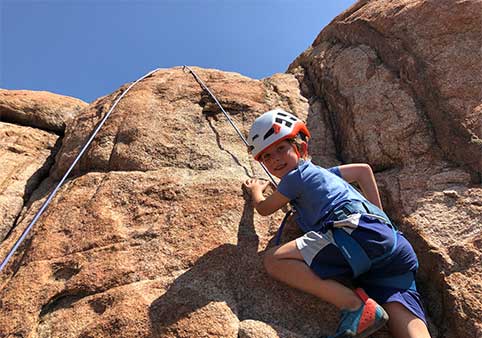
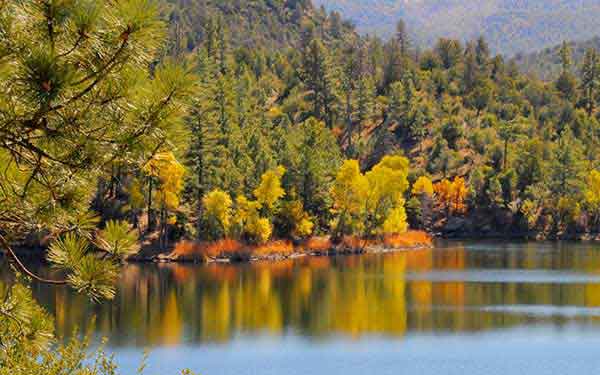
Prescott's granite landscape isn't just something to admire from a hiking trail. It has also made the area a destination for rock climbing and bouldering in Arizona, with everything from accessible granite boulders to challenging traditional climbing routes.
The Granite Dells provide some of the area's most recognizable climbing terrain, while Granite Mountain and other locations around Prescott offer larger cliffs and more committing routes. Climbers can find bouldering, traditional climbing, sport climbing and opportunities to learn with local guides.
You don't need to be an experienced climber to explore Prescott's climbing scene. Beginners can book guided instruction, while non-climbers can enjoy many of the same granite landscapes through Prescott's hiking and recreation trails.
Start with a professional climbing guide rather than choosing a route based on something you saw online. Prescott's granite can involve route-finding, specialized protection, exposed terrain and climbing techniques that aren't appropriate for inexperienced visitors.
Why Prescott Is a Rock-Climbing Destination
Granite defines much of Prescott's outdoor landscape.
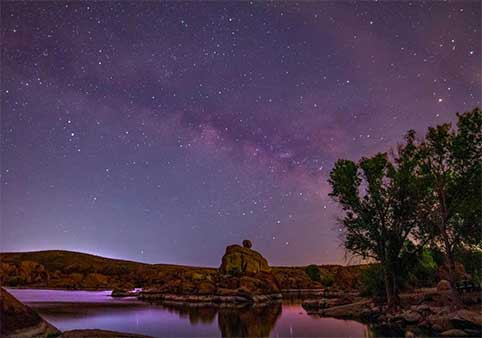
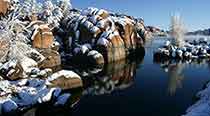
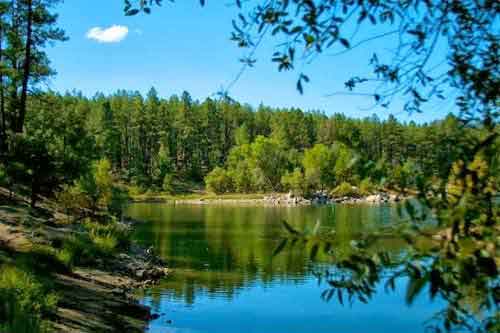
The most obvious example is the Granite Dells, where rounded boulders, walls, cracks and exposed slabs create the almost sculpted terrain surrounding Watson and Willow lakes.
Travel farther west and the landscape grows larger around Granite Basin and Granite Mountain.
That variety allows Prescott-area climbers to pursue several styles of climbing, including:
- Bouldering
- Traditional climbing
- Sport climbing
- Crack climbing
- Slab climbing
- Multi-pitch climbing in appropriate areas
The result is a climbing landscape that changes considerably depending on where you go.
Best Rock-Climbing Areas Around Prescott
Granite Dells
Best for: Bouldering, granite climbing, shorter climbing sessions and combining climbing with other Prescott recreation
The Granite Dells are the natural starting point for understanding Prescott climbing.
The enormous rounded granite formations visible around Watson and Willow lakes contain a mixture of bouldering and roped climbing opportunities.
The Dells are especially convenient because they're close to town and surrounded by other recreation.
A climbing trip can easily be combined with:
- Watson Lake
- Willow Lake
- Peavine Trail
- Constellation Trails
- Hiking
- Mountain biking
However, the abundance of rock shouldn't be interpreted to mean every formation is an established climbing area. Access, private property, environmental considerations and route conditions all matter.
Granite Mountain
Best for: Experienced climbers, traditional climbing and larger granite routes
Granite Mountain rises northwest of Prescott beyond the smaller formations of the Granite Dells.
The area provides a more serious climbing environment, with larger granite walls and established traditional routes.
Granite Mountain should not be approached as simply a bigger version of climbing in the Dells. Longer routes, exposure, route-finding and protection requirements can substantially increase the commitment involved.
The surrounding Granite Basin and Granite Mountain area is also important for hiking, camping, horseback riding and other outdoor recreation.
Parts of Granite Mountain lie within designated Wilderness. Wilderness regulations affect recreation and equipment use, and visitors should review current Prescott National Forest rules before their trip.
Bouldering in Prescott
Bouldering strips climbing down to its essentials: rock, climbing shoes, a relatively short problem and usually a crash pad instead of ropes.
Prescott's granite terrain creates numerous bouldering opportunities, particularly around the Granite Dells.
But "short" does not mean "safe."
Bouldering injuries frequently occur from falls close to the ground, especially when landings are uneven or surrounded by rocks.
Boulderers should use appropriate crash pads, understand spotting techniques and carefully inspect landing zones before climbing.
What makes Prescott bouldering different?
Granite rewards technique.
Depending on the problem, climbers may encounter:
- Small edges
- Cracks
- Sloping holds
- Friction-dependent movement
- Granite slabs
- Technical footwork
Climbers accustomed to another rock type may find Prescott granite requires a slightly different vocabulary of movement.
Traditional Climbing in Prescott
Traditional climbing, commonly called trad climbing, requires climbers to place removable protection into cracks and other rock features as they ascend.
Prescott's granite lends itself naturally to this style of climbing.
Trad climbing requires substantially more knowledge than simply clipping bolts on a sport route. Climbers need to understand:
- Protection placement
- Anchor construction
- Belaying
- Rappelling
- Route-finding
- Communication
- Risk management
Visitors without these skills should climb with an experienced qualified partner or professional guide.
Sport Climbing
Sport climbing uses established bolts and anchors rather than relying primarily on removable protection.
Sport routes exist in the broader Prescott climbing landscape, although the area is particularly well known for granite climbing that can involve cracks, slabs and traditional techniques.
Never assume bolts, anchors or fixed equipment are safe simply because they're present.
Outdoor climbing infrastructure can age, become damaged or change over time.
Rock Climbing for Beginners
Prescott can be a great place to try outdoor climbing for the first time, but beginners should distinguish between learning to climb and simply finding an easy-looking rock.
A guided climbing experience can introduce essential skills such as:
- Harness use
- Climbing knots
- Belaying
- Movement techniques
- Communication
- Equipment
- Outdoor climbing etiquette
- Basic risk management
Prescott.com lists local Granite Mountain Guides for visitors interested in professional climbing instruction and guided climbing experiences.
You can also compare climbing with other professionally led experiences in our guided adventures section.
Book a guided introduction rather than buying equipment and attempting an outdoor route independently. A guide can match terrain and instruction to your experience level.
Guided Rock Climbing in Prescott
Hiring a climbing guide isn't only useful for beginners.
Visiting climbers may also benefit from local knowledge when they have limited time or are unfamiliar with Prescott granite.
A guide can help with:
- Choosing terrain appropriate for your ability
- Local access information
- Technical instruction
- Equipment
- Route selection
- Anchor and protection skills
- Transitioning from indoor to outdoor climbing
Experienced climbers should discuss their goals and previous experience with the guide before booking so the outing can be matched appropriately.
Indoor Climbers Going Outdoors
Indoor climbing experience is valuable, but outdoor climbing introduces additional variables that a gym deliberately removes.
Outside, you may need to evaluate:
- Loose rock
- Weather
- Route-finding
- Natural hazards
- Approach terrain
- Anchors
- Communication over longer distances
- Other recreation users
A strong indoor climber can still be an inexperienced outdoor climber.
If Prescott will be your first outdoor climbing destination, professional instruction can help bridge that gap.
Climbing & Hiking in the Granite Dells
You don't have to choose between climbing and hiking.
The Granite Dells trail system allows climbers and non-climbers traveling together to experience the same larger landscape in different ways.
While part of the group climbs, others may want to explore:
- Constellation Trails
- Peavine Trail
- Watson Lake
- Willow Lake
See our Prescott hiking guide for additional trail options.
Climbing & Mountain Biking
Prescott is particularly useful for outdoor travelers whose interests extend beyond one sport.
The same granite and forest landscapes that attract climbers also contain an extensive mountain biking network.
Experienced riders can explore technical granite terrain around the Dells, while the surrounding forest contains everything from recreational riding to demanding singletrack.
See our Prescott mountain biking guide to compare riding areas.
Climbing & Camping
Camping can turn a climbing trip into a longer Prescott outdoor weekend.
The Granite Basin Recreation Area is particularly useful because it places visitors near Granite Mountain and surrounding forest recreation.
Other campgrounds around Prescott National Forest can provide access to different outdoor areas.
See our Prescott camping guide for campground options, seasons and trip-planning considerations.
Best Time of Year for Rock Climbing in Prescott
Prescott's elevation gives it a longer comfortable outdoor season than Arizona's lower deserts, but climbing conditions still change substantially throughout the year.
Spring
Spring can bring excellent climbing temperatures. Storms, lingering moisture and occasional late-season cold weather can still affect conditions.
Summer
Early mornings can be comfortable, but exposed granite becomes hot in direct sun.
Summer also brings Arizona's monsoon season, when thunderstorms and lightning can develop rapidly.
Fall
Fall is one of the most comfortable periods for climbing around Prescott, with cooler daytime temperatures and generally pleasant outdoor conditions.
Winter
Sunny exposures may offer climbing opportunities during mild periods, while shaded rock can remain cold, wet, snowy or icy.
Check the Prescott weather before your outing.
Monsoon Safety for Climbers
Climbers need to take Prescott's summer thunderstorms especially seriously.
A hiker can often turn around quickly. A climber halfway up a route may need considerably more time to descend safely.
During monsoon season:
- Start early.
- Check the forecast before leaving.
- Watch cloud development.
- Do not begin a long route when storms are building.
- Leave exposed rock before lightning arrives.
- Know how you will retreat from the route.
If thunder is developing, don't wait for rain to begin before retreating. Lightning can reach exposed cliffs and formations well before a storm appears directly overhead.
Climbing After Rain
Wet rock changes friction and can make approaches, slabs and descents considerably more dangerous.
Rain can also affect surrounding trails and access routes.
Give routes time to dry and avoid damaging wet approach trails.
When conditions are questionable, hiking on an appropriate durable route or choosing another Prescott activity is often the better option.
Wildlife & Natural Hazards
Rock formations provide habitat for wildlife as well as climbers.
Depending on location and season, climbers may encounter:
- Snakes
- Birds nesting on cliffs
- Insects
- Loose rock
- Falling debris
- Plants growing in cracks
Do not disturb active nests or wildlife.
Seasonal climbing restrictions can sometimes be implemented to protect nesting birds or other resources, so check current land-manager information before climbing.
Leave No Trace While Climbing
Climbing concentrates people in places that may otherwise receive relatively little foot traffic.
Help protect Prescott's climbing areas by:
- Using established approaches
- Avoiding vegetation
- Packing out trash
- Keeping chalk use reasonable
- Not altering rock
- Respecting closures
- Avoiding unnecessary trail creation
- Following current land-management rules
Do not remove vegetation, build unauthorized trails or modify holds.
Climbing on Public & Private Land
The Prescott climbing landscape includes City land, Prescott National Forest and areas near private property.
Do not assume that visible rock is automatically open for recreation.
Access can change because of:
- Private-property boundaries
- Seasonal closures
- Wildfire restrictions
- Resource protection
- Construction
- Temporary land-management decisions
Use current climbing information and respect posted signs, gates and closures.
What Gear Do You Need?
Equipment depends entirely on the style of climbing and route.
Typical bouldering equipment
- Climbing shoes
- Crash pad
- Chalk
- Appropriate clothing
- Water
Typical roped-climbing equipment
- Climbing shoes
- Harness
- Helmet
- Rope
- Belay device
- Carabiners
- Route-appropriate protection
- Anchor equipment
This is not an equipment checklist for a specific route. Climbers are responsible for understanding exactly what equipment and technical knowledge their chosen climb requires.
Should Climbers Wear Helmets?
A climbing helmet helps protect against falling rock, dropped equipment and some impacts during falls.
Outdoor climbing introduces hazards that aren't present in the controlled environment of an indoor gym.
Climbers should evaluate helmet use based on the activity, terrain and current professional safety guidance.
Climbing with Children
A professionally guided climbing outing can introduce older children and teenagers to climbing in a controlled, skill-appropriate setting.
Simply scrambling around granite formations is different from participating in a managed climbing experience.
Parents should be particularly cautious around:
- Cliff edges
- Drop-offs
- Loose rock
- Unprotected scrambling
- Bouldering landing zones
- Active climbing routes
For less technical adventures, see our family-friendly things to do in Prescott.
Climbing or Hiking?
If you love the granite landscape but aren't interested in ropes or technical climbing, Prescott has plenty of alternatives.
Try:
- Constellation Trails: Short routes directly through Granite Dells terrain.
- Peavine Trail: Easy walking and cycling with excellent views of the Dells.
- Watson Lake: Hiking and paddling among granite formations.
- Granite Basin: Forest and mountain hiking near Granite Mountain.
- Prescott hiking trails: Compare trails throughout the area.
You can experience Prescott's granite without ever leaving the ground.
Build a Prescott Climbing Weekend
Day 1: Granite Dells
Spend the morning climbing or bouldering in an appropriate Granite Dells area. Afterward, explore Watson Lake or hike part of the Peavine Trail.
Day 2: Granite Basin
Experienced climbers can explore appropriate climbing opportunities around Granite Mountain, while other members of the group hike or explore the Granite Basin Recreation Area.
Beginners can instead make one day a professionally guided climbing experience and use the second day for hiking, mountain biking or paddling.
More Prescott Outdoor Adventures
- Granite Dells: Explore the landscape at the center of Prescott's granite recreation.
- Granite Basin & Granite Mountain: Discover trails, camping and mountain recreation northwest of town.
- Hiking in Prescott: Compare trails throughout the city and surrounding forest.
- Mountain biking: Explore Prescott's extensive trail network by bike.
- Kayaking & paddleboarding: Get onto Watson, Willow and other Prescott-area lakes.
- Camping: Find campgrounds for a longer outdoor trip.
- Prescott National Forest: Plan recreation throughout the surrounding forest.
- Outdoor activities: Find more ways to experience Prescott outside.
Rock Climbing in Prescott FAQ
Is there rock climbing in Prescott, Arizona?
Yes. Prescott has an established climbing community and granite climbing terrain around the Granite Dells, Granite Mountain and other areas. Opportunities include bouldering, traditional climbing and other styles of rock climbing.
Where can you go rock climbing in Prescott?
The Granite Dells are one of the most recognizable climbing landscapes near Prescott, while Granite Mountain provides larger and more committing granite routes for experienced climbers.
Is there bouldering in Prescott?
Yes. The Granite Dells and surrounding granite terrain provide established bouldering opportunities. Climbers should use current route and access information rather than assuming every visible boulder is open to climbing.
Can beginners go rock climbing in Prescott?
Yes. Beginners can book guided climbing instruction that introduces equipment, belaying, movement and outdoor climbing safety on terrain appropriate for their experience.
Can you hire a rock-climbing guide in Prescott?
Yes. Local climbing guides offer instruction and guided climbing experiences for different ability levels. Prescott.com lists Granite Mountain Guides as one local option.
When is the best time to climb in Prescott?
Spring and fall often provide comfortable climbing temperatures. Summer climbing is generally better early in the day because of heat and afternoon monsoon thunderstorms, while winter conditions vary with elevation, exposure, snow and ice.
Can you climb in the Granite Dells?
Yes. Established climbing and bouldering opportunities exist within the larger Granite Dells landscape. Access and regulations vary by location, so climbers should use current local climbing information.
Is Granite Mountain good for rock climbing?
Granite Mountain has established climbing routes and is particularly associated with traditional granite climbing. Many routes require experience with protection, route-finding and multi-pitch climbing techniques.
Can indoor climbers climb outdoors in Prescott?
Indoor climbing provides useful movement and belaying experience, but outdoor climbing introduces route-finding, natural hazards, weather, anchors and other variables. First-time outdoor climbers should consider professional instruction.
What else can climbers do in Prescott?
Prescott also offers hiking, mountain biking, kayaking, paddleboarding, camping and horseback riding, making it easy to build a multi-activity outdoor trip.