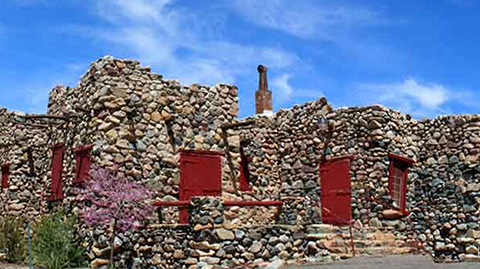
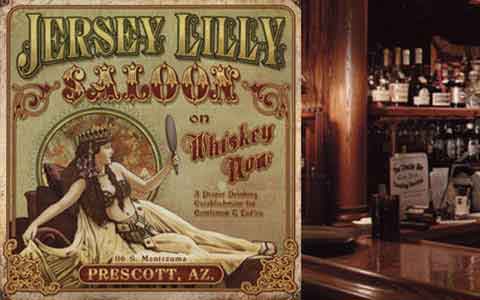
Prescott's Western heritage isn't confined to a museum display. It is woven into the city's historic downtown, Whiskey Row saloons, ranching traditions, Western art, rodeo culture and the stories of the people who lived in Arizona Territory.
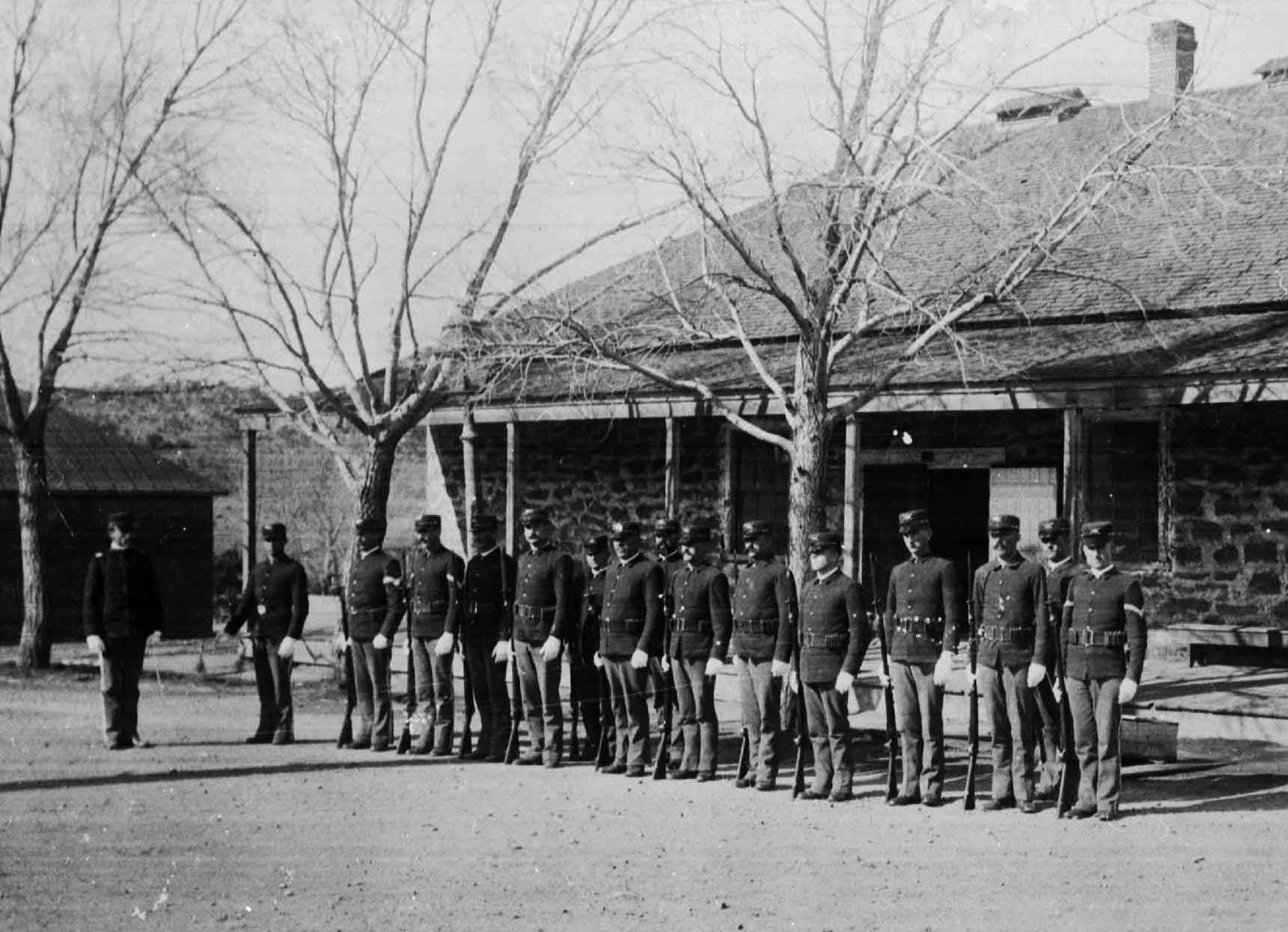
Prescott served as the first capital of the Arizona Territory, and its early years unfolded during the mining, ranching and frontier era that shaped much of the American West. Wyatt and Virgil Earp spent time here, Doc Holliday lived in Prescott before heading south to Tombstone, and generations of ranchers, cowboys, miners, merchants and settlers left their mark on the community.
Today, visitors can experience that history in several ways. Walk Whiskey Row, tour territorial-era buildings, see Western art, attend the World's Oldest Rodeo, ride horseback through the surrounding country, try gold panning or add a cowboy dinner and ranch experience to a Verde Valley day trip.
Start around Courthouse Plaza and Whiskey Row, visit Sharlot Hall Museum, and add the Phippen Museum if Western art and ranching culture interest you. If you're visiting around late June or early July, Prescott Frontier Days and the World's Oldest Rodeo become the centerpiece of the experience.
Best Western Experiences in Prescott
1. Walk Whiskey Row
If you only have time for one Western-history stop, make it Whiskey Row.
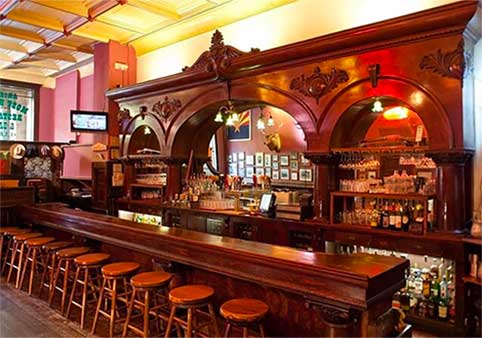
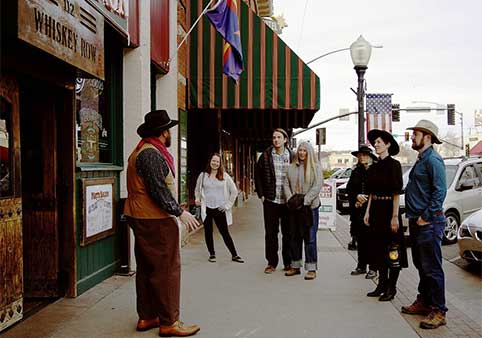
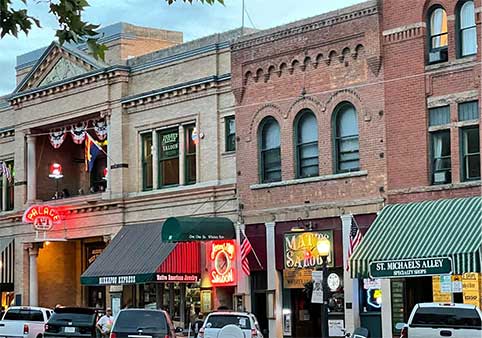
The block along Montezuma Street facing Courthouse Plaza became famous for its concentration of saloons during Prescott's frontier years. Fires repeatedly damaged downtown Prescott, including the devastating fire of 1900, but Whiskey Row was rebuilt and remained an important part of the city's identity.
Today, historic buildings share the street with restaurants, bars, shops and live entertainment. It is less a preserved frontier set than a living piece of downtown Prescott.
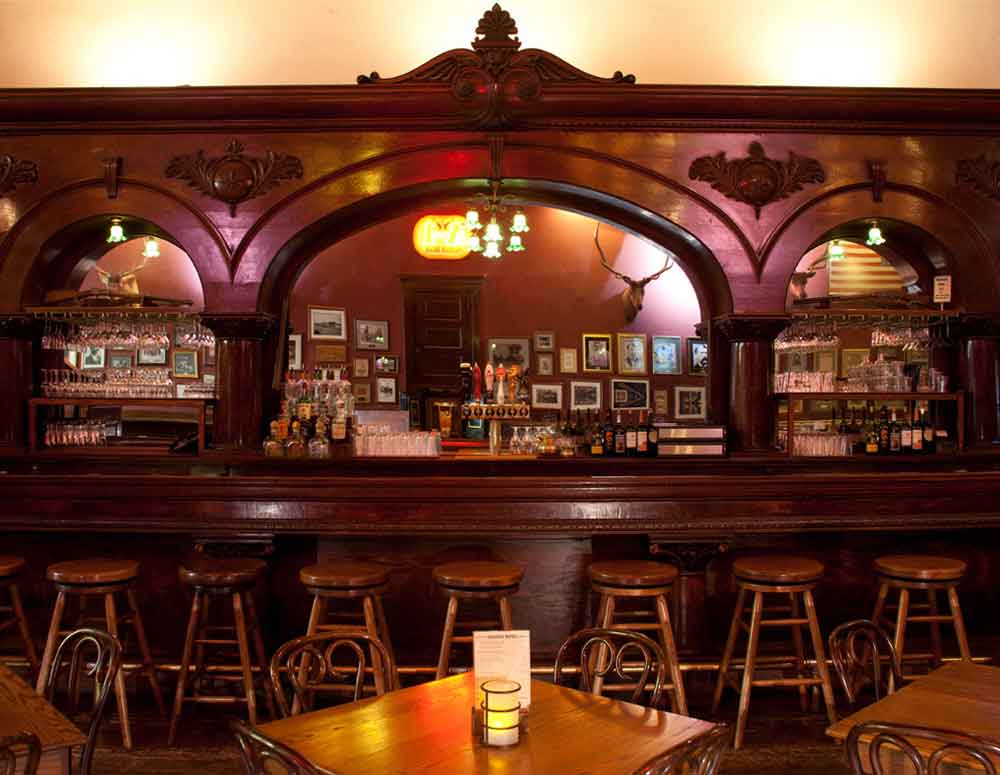
One of its best-known landmarks is The Palace Restaurant & Saloon, whose history dates to 1877. The Palace survived Prescott's changing fortunes and remains one of the city's most recognizable connections to its saloon era.
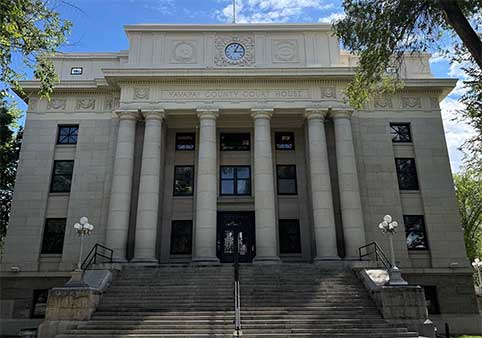
Whiskey Row is particularly enjoyable when combined with a walk around Courthouse Plaza, where you'll find additional historic buildings, monuments and some of the best people-watching in town.
2. Explore Sharlot Hall Museum
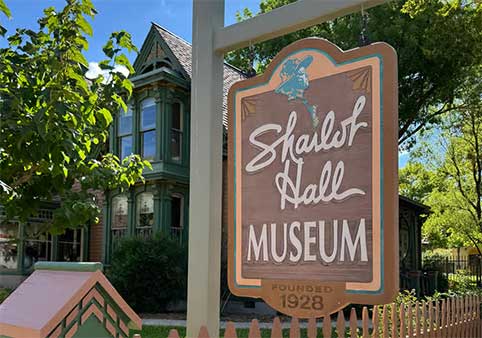
Sharlot Hall Museum is the best place to begin if you want to understand how Prescott fits into the larger story of territorial Arizona.
Rather than occupying a single museum building, the downtown campus includes historic structures, exhibits and collections covering Arizona's territorial period and the people who shaped the region.
One of its most significant structures is the log Governor's Mansion, constructed in 1864 when Prescott became the territorial capital.
A visit can help put the rest of downtown into context. After learning about territorial government, settlement and everyday life at the museum, the historic buildings surrounding Courthouse Plaza tend to mean a little more than they did an hour earlier.
For travelers interested in Prescott's broader cultural history, see our Prescott museums and art galleries guide.
3. See Western Art at the Phippen Museum
Phippen Museum approaches Western heritage through art, ranching and cowboy culture.
Named for Western artist George Phippen, the museum features paintings, sculpture and exhibitions exploring the people, landscapes and traditions of the American West.
It's an especially worthwhile stop if you're interested in the difference between Western history and the way the West has been portrayed by generations of artists.
The museum's location north of downtown also makes it easy to combine with other attractions around the Granite Dells and northern Prescott.
4. Attend the World's Oldest Rodeo
Few Prescott traditions are more closely associated with the city's Western identity than Prescott Frontier Days and the World's Oldest Rodeo.
Prescott's organized rodeo tradition dates to 1888, and the annual celebration has grown into one of the city's signature events. Rodeo competition typically includes bull riding, barrel racing, saddle bronc riding, bareback riding, steer wrestling, team roping and other professional rodeo events.
The celebration takes place around the Fourth of July period and extends beyond the rodeo arena with a parade, dances and other Western-themed events around Prescott.
See our World's Oldest Rodeo guide for more information about planning a visit during Prescott Frontier Days.
Expect Prescott to be considerably busier than on an ordinary summer weekend. Hotel rooms, RV sites and other accommodations can fill early, and traffic around major events increases. Check the current Prescott Frontier Days schedule before planning your trip.
5. Experience Prescott on Horseback
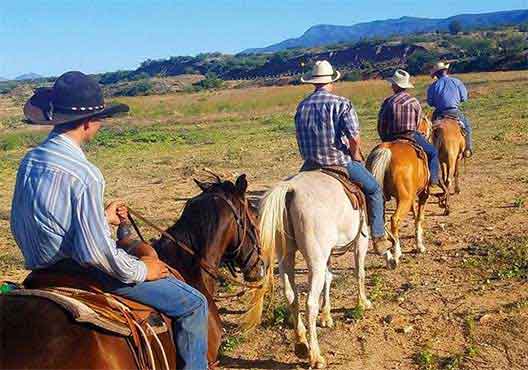
Prescott's Western heritage becomes considerably more tangible once you leave downtown and explore the surrounding landscape.
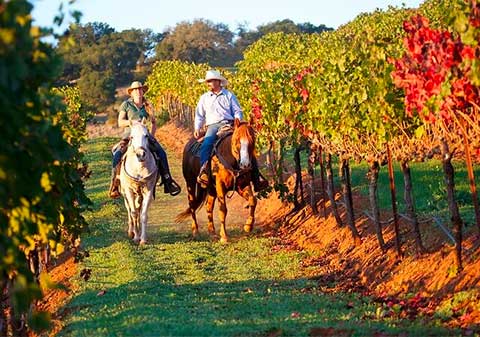
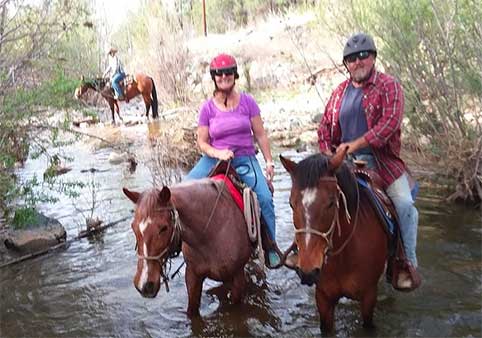
The forests, ranch country and high-desert terrain around Prescott provide opportunities for horseback riding and guided trail experiences. You don't need riding experience or your own horse to participate, although age, weight and experience requirements vary by outfitter.
Guided rides can be a particularly good choice for families, couples and visitors who want an outdoor activity connected to Arizona's ranching landscape without spending the day hiking.
See our Prescott horseback riding guide for more information about riding in the area.
6. Discover Prescott's Ranching & Cowboy Heritage
The story of Prescott's West is bigger than famous gunfighters and saloons. Ranching played an important role in the development of Yavapai County and remains part of the region's cultural identity.
That history can be explored through museum collections, Western art, rodeo traditions and the working landscapes surrounding Prescott.
Looking beyond the famous names gives visitors a more complete picture of the West: families establishing ranches, cowboys moving livestock, Indigenous communities with much deeper histories in the region, miners pursuing new discoveries and merchants building a territorial town.
That broader story is considerably more interesting than reducing Prescott's history to shootouts and saloons.
7. Add a Cowboy Cookout or Ranch Experience
Best for: Families, groups and travelers who want a more immersive Western-themed evening
Prescott gives you the historical side of Western Arizona, while nearby ranch attractions can add a more hands-on and entertainment-focused experience.
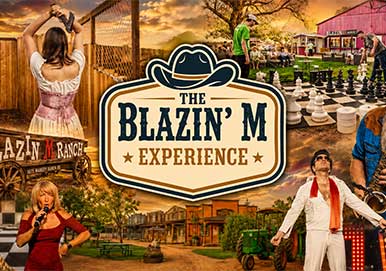
Blazin' M Ranch in Cottonwood is one of the better-known Western attractions in the Verde Valley. Visitors can spend time exploring the ranch's Western-themed activities before sitting down for a cowboy-style dinner and live entertainment.
- Western-themed activities and games
- Cowboy-style dinner
- Live Western entertainment
- Family-friendly atmosphere
- Easy to combine with Cottonwood, Jerome or a Verde Valley outing
Blazin' M Ranch is in Cottonwood rather than Prescott, so it works best as part of a Verde Valley excursion or one of your day trips from Prescott.
A simple itinerary is to drive from Prescott to Jerome, continue into Cottonwood and Old Town Cottonwood, and finish the day with an evening ranch experience before returning to Prescott.
8. Try Gold Panning & Hands-On Western Activities
Best for: Families, history-minded travelers and visitors looking for a hands-on connection to Arizona's mining past
Mining is another important part of central Arizona's Western story. Gold discoveries helped draw prospectors and settlers into the mountains surrounding Prescott, and recreational gold panning still gives visitors a hands-on connection to that history.
One of the better-known recreational areas is along Lynx Creek southeast of Prescott, where designated areas have historically provided opportunities for recreational prospecting.
Gold panning is less about expecting to strike it rich and more about understanding the patience and work involved in separating tiny pieces of gold from creek sediment. For families, it can also turn mining history from something read on a sign into something children can actually try.
Land status, prospecting regulations and permitted activities can change. Check current Prescott National Forest rules and make sure you are in an area legally open to recreational prospecting before digging or panning.
Top Old West Experiences in Prescott
- Walk Whiskey Row and explore Prescott's historic saloon district.
- Visit Sharlot Hall Museum for territorial Arizona history.
- See Western art at the Phippen Museum.
- Attend Prescott Frontier Days and the World's Oldest Rodeo.
- Ride horseback through the Prescott area's forest and high-desert landscapes.
- Try recreational gold panning where prospecting is legally permitted.
- Add a cowboy cookout at Blazin' M Ranch during a Verde Valley day trip.
- Explore historic Jerome to see another side of central Arizona's mining history.
Where to Experience Prescott's Western History
Whiskey Row
Walk the historic saloon district that became synonymous with Prescott's territorial-era nightlife, commerce and Old West stories.
Courthouse Plaza
Explore the historic square at the center of Prescott, directly across from Whiskey Row and surrounded by many of the city's oldest commercial blocks.
Sharlot Hall Museum
Go beyond saloon legends and learn about territorial government, families, ranching, transportation and daily life in early Prescott.
Phippen Museum
See Western art and exhibits focused on cowboy, ranching and regional heritage.
Prescott Frontier Days & the World's Oldest Rodeo
Experience one of Prescott's strongest living Western traditions through rodeo competition and the surrounding community celebration.
Famous Old West Figures Connected to Prescott
Wyatt Earp
Wyatt Earp spent time in Prescott before becoming permanently associated with Tombstone and the events surrounding the O.K. Corral. His Prescott connection is part of a much larger period in which the Earp brothers moved among Western mining and frontier communities.
For the broader story behind the territorial city they encountered, see our Prescott history guide and Sharlot Hall Museum guide.
Virgil Earp
Virgil Earp had stronger civic ties to Prescott and served in law enforcement in the community before his better-known years in Tombstone.
Doc Holliday
John Henry "Doc" Holliday also spent time in Prescott during his travels through the West. Like the Earps, his association with Arizona is usually dominated by Tombstone, but Prescott formed part of the larger network of frontier communities through which these figures moved.
The Earps and Doc Holliday make colorful additions to Prescott's story, but they represent only a small part of it. Territorial government, mining, ranching, Indigenous history, immigration and ordinary frontier life did far more to shape the community that Prescott eventually became.
Prescott's Western History Beyond Whiskey Row
Downtown is the easiest place to see Prescott's history, but Western heritage extends throughout the region.
The surrounding landscape played an enormous role in the city's development. Mining camps, ranches, wagon routes and settlements spread across what is now Yavapai County, while Prescott became an important governmental and commercial center.
Visitors interested in exploring beyond downtown can combine Prescott with several other historic communities in central Arizona.
- Jerome: Explore one of Arizona's best-known historic mining towns, built into the slopes of Cleopatra Hill.
- Cottonwood: Walk historic Old Town, visit tasting rooms and add a Western dinner experience at Blazin' M Ranch.
- Clarkdale: Discover a planned company town created during Arizona's copper era and ride the Verde Canyon Railroad.
- Camp Verde: Visit Fort Verde State Historic Park and learn more about the area's military and frontier history.
Our Verde Valley guide and day trips from Prescott can help you turn those destinations into a longer historical itinerary.
Plan a Western-Themed Day in Prescott
You don't need an entire vacation devoted to cowboy history. Prescott's compact downtown makes it easy to build Western heritage into a single day.
- Morning: Visit Sharlot Hall Museum and explore Arizona's territorial history.
- Late morning: Walk Courthouse Plaza and the surrounding historic district.
- Lunch: Eat on or near Whiskey Row.
- Afternoon: Visit the Phippen Museum or take a guided horseback ride.
- Evening: Return to Whiskey Row for dinner, live music and Prescott's historic downtown atmosphere.
Have Another Day? Follow the Western Story into the Verde Valley
With another day available, you can turn Prescott's Western history into a road trip through some of central Arizona's most interesting historic communities.
- Drive north from Prescott toward Jerome.
- Explore Jerome's mining history, hillside streets, shops and museums.
- Continue into Cottonwood and explore Old Town.
- Finish with a cowboy dinner and entertainment at Blazin' M Ranch if it fits your schedule.
- Return to Prescott after dinner or stay overnight in the Verde Valley.
This route connects several different chapters of Arizona history, from Prescott's territorial government and ranching culture to Jerome's copper boom and the communities that developed throughout the Verde Valley.
When Is the Best Time for a Western Prescott Trip?
You can explore Prescott's Western history year-round, but the experience changes with the seasons.
- Spring: Comfortable weather for combining downtown sightseeing with horseback riding and outdoor recreation.
- Late June and early July: Prescott Frontier Days and the World's Oldest Rodeo make this the biggest period for Western events.
- Summer: A good escape from Arizona's lower-desert heat, although afternoon monsoon storms are possible.
- Fall: Excellent weather for walking downtown, horseback riding and exploring the surrounding region.
- Winter: Quieter sightseeing and a very different atmosphere, particularly when snow reaches downtown Prescott.
Check our Prescott weather guide and Prescott events calendar when choosing your travel dates.
Is Prescott Worth Visiting for Old West History?
Yes, particularly if you want Western history without visiting a destination that feels entirely built around tourism.
Prescott's historic core remains an active downtown. Courthouse Plaza is still the center of community events. Whiskey Row still functions as a restaurant and nightlife district. Rodeo remains part of the city's identity, and the surrounding ranch country, forests and former mining areas provide a physical connection to the landscapes that shaped central Arizona.
Prescott also works well as a base for exploring the wider region. Jerome, Cottonwood, Clarkdale and Camp Verde each add another chapter to the story, making it possible to build an entire Central Arizona itinerary around Western, mining and territorial history.
The Old West isn't the only reason to visit Prescott, but you don't have to look very hard to find it.
For more ways to explore the city, see our things to do in Prescott and Prescott attractions guides.
Prescott Western Culture FAQ
Is Prescott an Old West town?
Prescott was founded during Arizona's territorial era and developed as a center of government, mining, ranching and commerce. Much of its historic downtown survives, and Western traditions remain visible through Whiskey Row, museums, rodeo and ranching culture.
What is Whiskey Row in Prescott?
Whiskey Row is the historic block of Montezuma Street facing Courthouse Plaza that became famous for its concentration of saloons during Prescott's frontier era. Today it contains restaurants, bars, shops and historic buildings.
Did Wyatt Earp live in Prescott?
Wyatt Earp spent time in Prescott before the events that later made him famous in Tombstone. His brother Virgil and Doc Holliday also had connections to Prescott.
What is the World's Oldest Rodeo?
Prescott's organized rodeo tradition dates to 1888. The annual World's Oldest Rodeo is held as part of Prescott Frontier Days around the Fourth of July period and remains one of the city's signature Western events.
What is the best museum for Prescott history?
Sharlot Hall Museum is an excellent starting point for Prescott and Arizona territorial history. The Phippen Museum is particularly good for visitors interested in Western art, ranching and cowboy culture.
Can you go horseback riding near Prescott?
Yes. Horseback riding and guided trail experiences are available in the Prescott area, with options varying by season and operator.
Can you pan for gold near Prescott?
Recreational gold panning has historically been available in designated areas around Lynx Creek and elsewhere in the region. Visitors should check current Prescott National Forest regulations and land status before prospecting.
Is Blazin' M Ranch in Prescott?
No. Blazin' M Ranch is located in Cottonwood in the Verde Valley. It can be added to a day trip from Prescott that also includes Jerome, Cottonwood or other Verde Valley attractions.
When is the best time to experience Prescott's Western culture?
Western history can be explored year-round. Late June and early July are particularly notable because Prescott Frontier Days and the World's Oldest Rodeo take place around the Fourth of July period.