Mountain biking in Prescott, Arizona ranges from relaxed gravel riding beside Watson Lake to technical singletrack, granite rock features, forest climbs and purpose-built gravity trails. With an extensive trail network spreading through the Prescott Basin and Prescott National Forest, riders can build anything from an easy one-hour outing to a full weekend around the bike.
The variety is what makes Prescott especially interesting. Ride through ponderosa pine in the morning, tackle granite features in the Dells, cruise the Peavine Trail beside Watson Lake or spend an afternoon on the purpose-built trails at Bean Peaks. Beginners have approachable places to start, while experienced riders can link together substantially longer and more technical routes.
Start with the Peavine Trail for an easy scenic ride. Try the Granite Dells and surrounding singletrack when you're ready for more technical terrain. Experienced riders looking for purpose-built features should put Bean Peaks on their list.
Best Mountain Biking Areas in Prescott
Rather than choosing a trail based only on mileage, think about the type of ride you want. Prescott's riding areas can feel dramatically different even when they're only a few miles apart.
Bean Peaks Gravity Flow Trails
Best for: Purpose-built mountain biking, progression, berms, jumps and gravity riding
The Bean Peaks Gravity Flow Trail System south of downtown is one of the most important additions to Prescott's mountain biking scene.
Unlike traditional multi-use trails that happen to allow bicycles, Bean Peaks was designed specifically around mountain biking. The one-way gravity trails incorporate features such as bermed turns, rollers, jumps and technical elements designed to create a more bike-focused riding experience.
The system also gives riders room to progress rather than treating every mountain biker as though they're looking for the same level of difficulty.
Bean Peaks is particularly worth considering if you:
- Enjoy flow trails
- Want purpose-built mountain bike terrain
- Are working on cornering and technical skills
- Enjoy berms, rollers and optional features
- Want a riding area close to Prescott
Check current trail maps, difficulty ratings, closures and construction status before riding because the trail system continues to evolve.
Granite Dells
Best for: Technical riding, granite terrain and classic Prescott scenery
The Granite Dells are one of the landscapes that make mountain biking in Prescott different from riding almost anywhere else in Arizona.
Rounded granite formations surround Watson and Willow lakes, with trails weaving through boulders, exposed rock, desert vegetation and open terrain.
Depending on the route, riders can encounter:
- Rock gardens
- Granite rolls
- Short technical climbs
- Rock drops
- Tight singletrack
- Open views across the Dells
- Connections to easier trails around Watson Lake
This is an area where mileage can be deceptive. A relatively short technical ride through granite can require considerably more time and energy than the same distance on a smooth forest trail.
Experienced riders looking for distinctly Prescott terrain should make the Granite Dells one of their priorities.
See our complete Granite Dells guide for Watson Lake, Willow Lake, hiking, paddling, climbing and the larger landscape surrounding these trails.
Peavine Trail
Best for: Beginners, families, e-bikes and scenic recreational riding
The Prescott Peavine Trail is one of the easiest introductions to cycling in Prescott.
Following a former railroad corridor, the broad trail offers relatively gentle riding with views of Watson Lake and the Granite Dells. Its packed dirt and gravel surface makes it considerably less technical than Prescott's singletrack trails.
That makes Peavine a good choice for:
- Beginner riders
- Families
- Visitors unfamiliar with Prescott terrain
- Recreational cyclists
- Many e-bike riders
- Riders who want scenery without technical obstacles
The trail also provides access to more challenging riding around the Granite Dells, allowing stronger riders to use Peavine as part of a larger route.
See our complete Peavine Trail guide before your ride.
Goldwater & South Prescott Trails
Best for: Forest singletrack, climbing and intermediate riders
The trail network south of Prescott transitions into a cooler, more forested environment around Goldwater Lake and the surrounding Prescott National Forest.
One of the area's better-known routes is Goldwater Lakes Trail #396, an intermediate singletrack trail that can be incorporated into longer rides through the surrounding forest.
This part of Prescott offers a noticeably different riding experience from the exposed granite of the Dells. Expect more pine forest, climbing, descending and traditional mountain singletrack.
Visitors can also explore Goldwater Lake before or after a ride.
Prescott National Forest
Best for: Longer rides, forest singletrack and route-building
Many of Prescott's mountain biking opportunities extend into Prescott National Forest, where riders can combine individual trails into much longer routes.
The forest surrounding Prescott includes terrain ranging from open chaparral and high-desert vegetation to ponderosa pine and higher-elevation mountain landscapes.
This is where experienced riders can begin moving beyond individual named trails and start building half-day or full-day rides.
Prescott's trail network includes numerous intersections and connecting trails. Longer rides can become complicated quickly, so carry an offline trail map or GPS route rather than relying entirely on cell service.
Explore Prescott's Mountain Bike Trail Systems
Prescott's riding areas are connected by a much larger trail network. Use these guides to understand the terrain before building your route.
Granite Dells
Explore the granite landscape surrounding Watson and Willow lakes, including trails ranging from easy rail-trail riding to technical rock terrain.
Constellation Trails
Ride a compact Granite Dells trail network with tight turns, granite slabs and technical features packed into relatively short distances.
Granite Basin
Explore forest singletrack and longer routes northwest of Prescott while staying aware of the Granite Mountain Wilderness boundary, where bicycles are prohibited.
Prescott Circle Trail
Use Prescott's roughly 55-mile loop to understand how the city's major riding areas and trail systems connect.
For route planning and an explanation of how the larger loop fits together, see our Prescott Circle Trail guide.
Visitors who want less technical terrain can start with the Peavine Trail.
Popular Prescott Mountain Bike Trails
The best trail depends on your skill level and the type of riding you're looking for. These are several trails and routes worth considering when planning a Prescott mountain biking trip.
Peavine Trail
Difficulty: Easy
Trail type: Broad dirt and gravel trail
Best for: Beginners, families and scenic riding
Peavine provides the easiest entry point for many visiting cyclists and offers excellent views of Watson Lake and the Granite Dells without requiring advanced technical skills.
Homestead Trail #305
Difficulty: Intermediate to difficult
Trail type: Singletrack
Best for: Stronger riders looking for a more challenging Prescott ride
Homestead provides a more demanding experience than Prescott's recreational paths and can be incorporated into rides through the surrounding trail network.
Ranch Trail #62
Difficulty: Intermediate
Trail type: Singletrack
Best for: Intermediate riders and longer trail outings
Ranch Trail is another useful option for riders who have moved beyond beginner terrain and want to experience Prescott's traditional singletrack.
Goldwater Lakes Trail #396
Difficulty: Intermediate
Trail type: Singletrack
Best for: Forest riding and combining with other south Prescott trails
This trail takes riders into the forested landscape around Goldwater Lake and can form part of a larger ride through the south Prescott trail system.
Firewater Trail #325
Difficulty: Intermediate
Trail type: Technical singletrack
Best for: Riders comfortable with rock features
Firewater is short compared with some Prescott routes, but its rock features make technical ability more important than mileage alone.
Wolverton Mountain Trail #9415
Difficulty: Intermediate to difficult
Trail type: Singletrack and climbing
Best for: Riders who don't mind earning their descents
Wolverton Mountain provides a more physically demanding option for riders looking to add climbing to their Prescott itinerary.
Tatanka
Difficulty: Intermediate
Trail type: Technical singletrack
Best for: Granite features and technical riding
Tatanka incorporates the type of rock gardens and granite riding that help give Prescott its distinctive mountain biking character.
Happy Ending
Difficulty: Difficult
Trail type: Technical singletrack
Best for: Experienced riders
Don't judge this trail by its short distance. Rock gardens and drops make technical skill far more important than mileage.
Best Prescott Mountain Biking for Beginners
You don't need advanced bike-handling skills to enjoy riding in Prescott.
The Peavine Trail is the most straightforward place for many beginners to start. Its relatively gentle grade and broad surface allow riders to concentrate on the scenery rather than navigating continuous rocks and technical features.
New mountain bikers should resist the temptation to choose trails based only on distance. A three-mile technical singletrack ride can be considerably harder than a much longer recreational trail.
If you're progressing into singletrack, choose shorter routes first and pay attention to:
- Technical difficulty
- Elevation gain
- Rock features
- Trail exposure
- Surface conditions
- Distance from your starting point
Best Prescott Mountain Biking for Experienced Riders
More experienced mountain bikers can use Prescott's interconnected trail network to build significantly more ambitious rides.
Look toward:
- Bean Peaks for purpose-built gravity riding
- Granite Dells for technical rock features
- Goldwater-area trails for forest singletrack
- Wolverton Mountain for climbing
- Prescott National Forest for longer linked routes
- Prescott Circle Trail segments for bigger mileage
Technical riders should be prepared for loose surfaces, exposed granite, rock gardens, short steep pitches and trail conditions that can change after storms.
Prescott Circle Trail
For riders interested in something much bigger, the Prescott Circle Trail links trail systems around the city into a roughly 50-plus-mile route.
You don't need to ride the entire loop to enjoy it.
Many visitors use individual sections of the Circle Trail to connect other riding areas, while endurance riders may tackle much longer portions or attempt the complete route.
Because terrain, difficulty and trail conditions vary around the loop, riders should research their planned section rather than assuming the entire Circle Trail offers the same type of riding.
Whiskey Off-Road
Prescott's mountain biking culture gets its biggest annual spotlight during the Whiskey Off-Road.
The event begins in historic downtown Prescott near Whiskey Row before sending riders into the surrounding trails of Prescott National Forest.
The race weekend traditionally includes several cycling events and festivities that may include:
- Backcountry mountain bike races
- Professional and amateur competition
- Bike and gear expo
- Live music
- Kids' riding events
- Downtown activities
If mountain biking is the main reason for your trip, attending during Whiskey Off-Road offers a very different experience from an ordinary riding weekend.
See our Prescott festivals and events guide for additional annual events.
When Is the Best Time to Mountain Bike in Prescott?
Prescott's elevation gives it a much different riding climate from Phoenix and Arizona's lower deserts.
Spring
Spring is one of the most popular periods for mountain biking as temperatures become more comfortable and trails begin transitioning out of winter conditions.
Higher and shaded trails can still hold snow, mud or moisture after winter storms, so conditions matter more than the calendar.
Summer
Prescott is considerably cooler than Phoenix, making summer riding possible when lower-desert trails become extremely hot.
Early morning is usually the best time to ride. Arizona's summer monsoon season can produce thunderstorms, lightning and heavy rain later in the day.
Fall
Fall often brings excellent riding conditions, with cooler daytime temperatures and generally comfortable conditions in the forest.
Winter
Mountain biking can be possible during winter, but snow, ice, mud and freeze-thaw conditions may temporarily make trails unsuitable for riding.
Check the Prescott weather and current trail conditions before planning a winter ride.
Don't ride muddy trails simply because they're technically open. Tires can leave deep ruts that remain long after the trail dries. If you're leaving a significant track, choose a drier route or ride another day.
Mountain Biking Around Watson Lake
Watson Lake is particularly useful for groups where some people want an easy ride while others want something more technical.
Beginner and recreational riders can use the Peavine Trail, while experienced mountain bikers can explore connecting singletrack and the more technical terrain of the Granite Dells.
That makes the area easy to combine with other activities as well.
After your ride, explore Watson Lake by foot or kayak, have a picnic or spend more time photographing the granite formations.
Mountain Bikes vs. E-Bikes in Prescott
E-bikes can make Prescott's elevation and longer routes more accessible, but riders should not assume that every trail allows every class of e-bike.
Rules can vary depending on whether the trail crosses city property, Prescott National Forest or another land-management area.
Before riding an e-bike:
- Check whether e-bikes are permitted on the trail
- Confirm which e-bike classes are allowed
- Know your battery range
- Remember that technical terrain still requires bike-handling skills
- Carry the equipment needed to repair a flat
An electric motor can help with the climb, but it doesn't make a rock garden disappear.
Should You Book a Guided Mountain Bike Ride?
Experienced riders comfortable with navigation may have no trouble exploring Prescott independently.
A guide can be useful if you're:
- New to mountain biking
- Unfamiliar with Prescott's trail network
- Looking for terrain matched to your ability
- Trying technical riding for the first time
- Traveling without your normal equipment
- Short on time and don't want to spend your morning route planning
See our guided outdoor adventures in Prescott for additional options.
What to Bring Mountain Biking in Prescott
- Helmet
- Plenty of water
- Trail map or offline navigation
- Spare tube or tubeless repair kit
- Bike pump or CO2 inflator
- Basic multi-tool
- Sun protection
- Snacks for longer rides
- Light layers
- Rain protection during monsoon season
- First-aid basics
For longer backcountry rides, carry enough equipment to solve common mechanical problems without relying on immediate assistance.
Planning a Prescott Mountain Biking Weekend
Prescott works particularly well as a biking destination because you can ride very different terrain without spending the entire trip driving between trailheads.
Day 1: Peavine Trail & Granite Dells
Start with the Peavine Trail to get oriented, then explore more technical riding around the Granite Dells if your skill level allows.
Day 2: Forest Singletrack
Head toward the Goldwater area or Prescott National Forest for a longer ride through pine forest and mountain terrain.
Day 3: Bean Peaks
Finish the trip with purpose-built riding at Bean Peaks, choosing trails appropriate to your experience and comfort level.
After riding, downtown Prescott provides an easy change of pace with restaurants, breweries and Whiskey Row only minutes from many of the area's trail systems.
Where to Stay for a Prescott Mountain Biking Trip
Most Prescott riding areas are close enough to the city that you don't need to choose lodging beside one specific trailhead.
Instead, consider what you want after the ride.
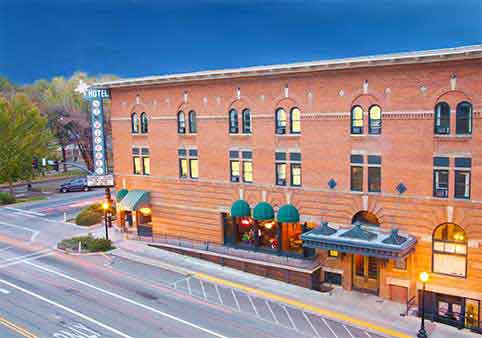
- Downtown: Best for walking to restaurants, breweries and Whiskey Row after riding.
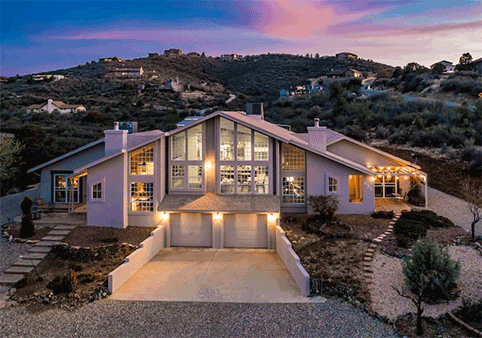
- Vacation rental: Useful for groups that want more room for bikes and equipment.
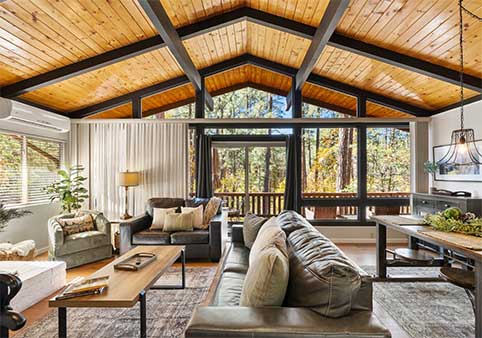
- Cabin: Good for riders who want a more forest-oriented Prescott experience.
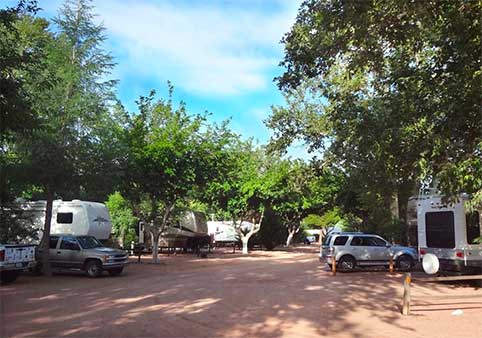
- RV park or campground: Useful for travelers building mountain biking into a longer outdoor road trip.
Compare options in our Prescott lodging guide.
Prescott Mountain Biking Tips
- Choose by difficulty, not mileage. Prescott's technical trails can make short rides surprisingly demanding.
- Start early in summer. Morning rides reduce heat exposure and the risk of getting caught in afternoon thunderstorms.
- Carry navigation. Prescott has an extensive interconnected trail network.
- Don't ride mud. Wait for trails to dry after storms.
- Yield appropriately. Many Prescott trails are shared with hikers and equestrians.
- Control your speed. Expect other trail users around blind corners.
- Check e-bike rules. Access varies by trail and land manager.
- Bring more water than you think you'll need. Elevation, sun and dry air can catch visiting riders off guard.
- Check trail conditions. Snow, wildfire restrictions, maintenance and storm damage can affect access.
Trail conditions, closures, construction and access rules can change. Check current trail information, weather and land-management restrictions before beginning your ride.
Prescott Mountain Biking FAQ
Is Prescott good for mountain biking?
Yes. Prescott has an extensive network of mountain biking trails ranging from easy recreational routes to technical granite singletrack, forest trails, long-distance routes and purpose-built gravity trails.
What is the easiest mountain bike trail in Prescott?
The Peavine Trail is one of the easiest and most approachable rides for beginners. Its broad dirt and gravel surface follows a former railroad corridor and offers views of Watson Lake and the Granite Dells.
Where can experienced mountain bikers ride in Prescott?
Experienced riders can explore technical terrain in the Granite Dells, purpose-built trails at Bean Peaks, forest singletrack around Goldwater Lake and longer routes throughout Prescott National Forest.
What is Bean Peaks?
Bean Peaks is a purpose-built mountain biking trail system south of downtown Prescott. Its gravity-oriented trails incorporate features such as berms, rollers, jumps and technical elements across different difficulty levels.
Can you mountain bike around Watson Lake?
Yes. The Watson Lake and Granite Dells area offers both easy riding on the Peavine Trail and more technical singletrack for experienced mountain bikers.
Can you ride e-bikes on Prescott trails?
E-bike access varies by trail and land manager. Riders should check the rules for the specific trail and confirm which classes of e-bike are permitted before riding.
When is the best time to mountain bike in Prescott?
Spring and fall generally offer excellent riding temperatures. Summer riding is best earlier in the day because of heat and afternoon monsoon thunderstorms. Winter riding depends on snow, ice, mud and current trail conditions.
Does Prescott have a mountain bike race?
Yes. The Whiskey Off-Road is Prescott's signature mountain biking event, beginning in historic downtown Prescott and sending riders into the surrounding Prescott National Forest trail system.
Do I need a guide to mountain bike in Prescott?
No. Many riders explore Prescott independently. A guide can be useful for beginners, visitors unfamiliar with the trail network or riders who want help finding terrain appropriate to their ability.