Sharlot Hall Museum is one of the best places to understand how Prescott became the first territorial capital of Arizona and how the community developed during the territorial era. Located just west of Courthouse Plaza, the museum occupies a landscaped campus of historic buildings, exhibit spaces, gardens and collections centered around the original 1864 Governor's Mansion.
Unlike a museum contained inside a single building, Sharlot Hall is best experienced by walking through the campus. Visitors move between historic structures and exhibits that explore early Prescott, territorial government, pioneer life, transportation, ranching, mining and the people who shaped central Arizona.
Prescott history, Arizona territorial history, historic architecture and visitors who want to understand the story behind Courthouse Plaza, Whiskey Row and the city's Old West identity.
Why Visit Sharlot Hall Museum?
Many visitors first experience Prescott through Whiskey Row, the Courthouse Plaza and the city's Western atmosphere. Sharlot Hall Museum provides the historical context that explains how those places developed.
The museum's strongest feature is its setting. Rather than displaying Prescott history only through objects behind glass, the campus incorporates preserved and reconstructed historic buildings that allow visitors to move physically through different periods of Arizona's territorial past.
This makes Sharlot Hall especially valuable early in a Prescott trip. Spend time here first, and many of the historic buildings, names and stories you encounter elsewhere around the city begin to make more sense.
For a broader overview before your visit, see our Prescott history guide.
The 1864 Governor's Mansion
The centerpiece of Sharlot Hall Museum is the Governor's Mansion, a log building constructed in 1864 during the establishment of Prescott as the capital of the newly created Arizona Territory.
The building served as the residence and office of Territorial Governor John N. Goodwin and Territorial Secretary Richard C. McCormick.
Despite the grand-sounding name, the "mansion" was a frontier log building. In the developing territorial settlement, however, it was substantial enough to become an important center of government and community life.
The building's survival is remarkable because much of early Prescott disappeared as the city changed, fires reshaped downtown and newer construction replaced territorial-era structures.
Today, walking through the Governor's Mansion provides one of Prescott's most direct connections to the city's earliest years.
Who Was Sharlot Hall?
Sharlot M. Hall was a historian, writer, poet, rancher and preservation advocate whose work helped save important pieces of Arizona history that might otherwise have disappeared.
She became Arizona's first female Territorial Historian in 1909 and spent years collecting documents, artifacts, photographs and stories connected to Arizona's early communities.
Hall became particularly determined to preserve the old Governor's Mansion. After the State of Arizona purchased the property and the City of Prescott assumed responsibility for maintaining it, Hall eventually gained access to the building and began restoring it and installing her historical collections.
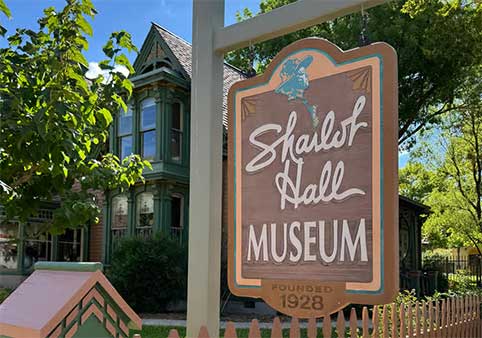
The museum opened to the public in 1928.
Her preservation work ultimately created something larger than a single restored building. The site expanded into the museum campus visitors explore today.
Historic Buildings at Sharlot Hall Museum
Sharlot Hall Museum contains multiple historic and exhibit buildings, allowing visitors to explore different aspects of Arizona architecture and territorial life.
Buildings and exhibits on the campus may include:
- The 1864 Governor's Mansion
- Historic residential buildings
- Territorial-era structures
- Transportation exhibits
- Exhibition galleries
- Buildings interpreting ranching and pioneer life
- Changing exhibit spaces
The museum currently describes its campus as containing 11 exhibit buildings, so allow time to explore rather than treating Sharlot Hall as a quick stop.
Some buildings are original historic structures, while others help interpret different periods and themes in Arizona history.
What You'll Learn at Sharlot Hall Museum
The museum's collections and exhibits cover a much broader story than one governor or one building.
Depending on current exhibitions, visitors can learn about:
- The creation of Arizona Territory
- Prescott's role as territorial capital
- Early government and civic life
- Pioneer communities
- Ranching and agriculture
- Mining and transportation
- Historic architecture
- Everyday life in territorial Arizona
- The preservation of Prescott history
Temporary exhibitions and educational programs can add additional subjects throughout the year.
Sharlot Hall Museum & Prescott's Territorial Capital
Prescott's identity is closely tied to its role in Arizona territorial history.
When Arizona Territory was established during the Civil War era, federal officials traveled west to organize the new territorial government. Prescott emerged as the first territorial capital, and the Governor's Mansion became part residence, part office and part gathering place for the new government.
The territorial capital later moved to Tucson before returning to Prescott and eventually moving permanently to Phoenix.
That history helps explain why Prescott contains such a concentration of territorial-era stories and institutions.
After visiting the museum, continue to Courthouse Plaza to see how the civic center of Prescott developed beyond the earliest territorial settlement.
After learning how Prescott began, walk east to Courthouse Plaza to see how the city's civic center developed, then continue across Montezuma Street to Whiskey Row for the commercial and social side of Prescott history.
Sharlot Hall Museum & Whiskey Row
Sharlot Hall Museum and Whiskey Row tell two different sides of Prescott history.
The museum focuses heavily on government, settlement, preservation and everyday life, while Whiskey Row represents the commercial and social side of the growing territorial town.
Visiting both creates a much better picture of Prescott than seeing either one alone.
You can easily combine the two because Sharlot Hall Museum is located just west of the historic downtown core.
Combine Sharlot Hall Museum with Courthouse Plaza
The museum is close enough to Courthouse Plaza that the two should be treated as part of the same historic walking experience.
A simple route is to begin at the museum, then walk east toward Courthouse Plaza and Whiskey Row.
That order works particularly well because the museum explains the early territorial period before you encounter Prescott's later civic and commercial center.
Afterward, stop for lunch or dinner using our Prescott restaurants guide.
Compare Prescott's Museums
Prescott's major museums complement one another rather than repeating the same story.
For a complete museum comparison by subject and interest, see our Prescott museums and art guide.
Sharlot Hall Museum
Best for: Prescott history, Arizona territorial history and historic buildings.
Phippen Museum
The Phippen Museum focuses on Western art, cowboy heritage and ranching traditions.
Museum of Indigenous People
The Museum of Indigenous People presents Indigenous art, cultural objects and histories of the Southwest.
Fort Whipple Museum
Fort Whipple adds military and veterans' history to the Prescott story, from the territorial-era Army post through its later development as a medical facility.
See our complete Prescott museums and art galleries guide to compare these and other cultural attractions.
Is Sharlot Hall Museum Good for Families?
Yes, particularly for families with children who learn better by moving through buildings and outdoor spaces than by spending an entire visit inside conventional galleries.
The campus layout gives children frequent changes of scenery, while historic structures make it easier to imagine what life in early Prescott may have looked like.
Families don't necessarily need to examine every exhibit. Pick a few buildings and stories that interest your group and allow enough time to explore them without rushing.
For more ideas, see our family-friendly things to do in Prescott.
Is Sharlot Hall Museum Good for Senior Visitors?
The museum is also a strong choice for visitors who prefer history, culture and moderate walking over more strenuous outdoor recreation.
Because the attraction is spread across a campus, visitors should consider walking distances, outdoor temperatures and accessibility between buildings.
If mobility is a consideration, check current museum accessibility information before visiting so you know which buildings and routes best suit your needs.
See our things to do in Prescott for seniors for additional relaxed sightseeing options.
Events & Programs at Sharlot Hall Museum
Sharlot Hall Museum hosts educational programs and special events throughout the year.
Recurring programming has included cultural events, historical demonstrations, lectures, music and seasonal celebrations.
One of the museum's major cultural events is the Prescott Indian Art Market, which brings Indigenous artists and their work to the museum campus.
Because event dates and programs change, check the current museum schedule and the Prescott events calendar if you're hoping to attend a particular event.
Prescott Indian Art Market
The Prescott Indian Art Market is an important annual cultural event hosted at Sharlot Hall Museum.
The market brings Indigenous artists together to present and sell work in multiple media, creating an opportunity for visitors to engage directly with contemporary Native artists rather than treating Indigenous culture only as history.
If Indigenous art and culture are a major interest, consider pairing the market or museum visit with the Museum of Indigenous People.
Visitors who want the broader historical timeline can continue with our Prescott history guide, while Prescott Western culture focuses more specifically on cowboy, ranching, rodeo and Old West traditions.
Planning Your Visit
Location
Sharlot Hall Museum
415 W. Gurley Street
Prescott, AZ 86301
The museum is located just west of Courthouse Plaza and the central historic district.
How Long Should You Spend?
Most visitors should allow approximately two to three hours if they want to explore several buildings without rushing.
Visitors with a strong interest in Arizona history can easily spend longer.
Hours & Admission
Hours and admission prices vary by season and can change.
Rather than relying on an older travel article, check current visitor information directly with Sharlot Hall Museum before making a special trip.
Parking
Parking options are available around the museum and surrounding historic district.
If you're combining Sharlot Hall with Courthouse Plaza and Whiskey Row, consider parking once and walking between attractions rather than moving your vehicle repeatedly.
Museum hours, admission, building access, exhibitions and special-event schedules can change. Confirm current information with Sharlot Hall Museum before planning your day around a particular program or exhibit.
A Prescott History Day
Sharlot Hall Museum is the natural anchor for a history-focused Prescott itinerary.
Morning: Sharlot Hall Museum
Begin with the museum while you're fresh enough to explore several buildings and exhibits.
Lunch: Historic Prescott
Walk toward Courthouse Plaza and choose a restaurant downtown.
Afternoon: Courthouse Plaza & Whiskey Row
Explore the Plaza, historic buildings and Whiskey Row.
Later Afternoon: Choose Another Museum
Add the Phippen Museum, Museum of Indigenous People or Fort Whipple depending on the part of Prescott history that interests you most.
If one museum is enough, spend the remainder of the day shopping, dining or exploring more things to do in Prescott.
Sharlot Hall Museum & Prescott's Western Culture
Sharlot Hall Museum is also an important stop for visitors interested in Prescott's Old West identity.
However, the museum helps broaden that story beyond saloons and cowboys.
Prescott's Western history also involves territorial government, ranching, military activity, families, transportation, Indigenous communities, women, immigrants, merchants and the development of a permanent town.
For the larger picture, continue with our Prescott Western culture guide.
Why the Museum Still Matters
Sharlot Hall's work was fundamentally about preservation.
By the early 20th century, Prescott was changing rapidly, and buildings and personal histories from the territorial period were already disappearing.
Saving the Governor's Mansion and collecting documents, objects and stories created a physical record of early Arizona that visitors can still experience today.
That makes the museum more than a place containing historical objects. The museum itself is part of Prescott's preservation history.
Sharlot Hall Museum FAQ
What is Sharlot Hall Museum?
Sharlot Hall Museum is a history museum in Prescott focused on Arizona's territorial era, Prescott history and the people and communities that shaped central Arizona. Its campus includes historic buildings and exhibit spaces centered around the 1864 Governor's Mansion.
Where is Sharlot Hall Museum?
The museum is located at 415 W. Gurley Street in Prescott, just west of Courthouse Plaza and Whiskey Row.
What is the Governor's Mansion at Sharlot Hall Museum?
The Governor's Mansion is an 1864 log building that served as the residence and office of Arizona Territorial Governor John N. Goodwin and Territorial Secretary Richard C. McCormick. It became the foundation of today's Sharlot Hall Museum.
Who was Sharlot Hall?
Sharlot M. Hall was an Arizona historian, writer, poet, rancher and preservation advocate. She became Arizona's first female Territorial Historian and played a central role in preserving the Governor's Mansion and creating the museum that now bears her name.
When did Sharlot Hall Museum open?
Sharlot Hall opened the museum to the public in 1928 after restoring the Governor's Mansion and installing historical collections in the building.
How long should you spend at Sharlot Hall Museum?
Plan on approximately two to three hours for a typical visit. Visitors with a strong interest in Arizona history may want additional time to explore the campus and exhibitions.
Is Sharlot Hall Museum close to Whiskey Row?
Yes. The museum is located just west of Prescott's central historic district and can easily be combined with Courthouse Plaza and Whiskey Row.
Is Sharlot Hall Museum good for children?
Yes. The multi-building campus and historic structures can make the museum particularly engaging for children who enjoy exploring physical places rather than viewing only traditional gallery exhibits.
What other Prescott museums should you visit?
The Phippen Museum focuses on Western art and cowboy heritage, the Museum of Indigenous People explores Indigenous art and cultures of the Southwest, and Fort Whipple adds military and veterans' history.
OTHER MUSEUMS & ATTRACTIONS IN PRESCOTT
Prescott - Territorial Arizona's Capital City - Day Tour from Phoenix
Prescott City Highlights Tour with Museum Entry
Mutli-Attraction Tours
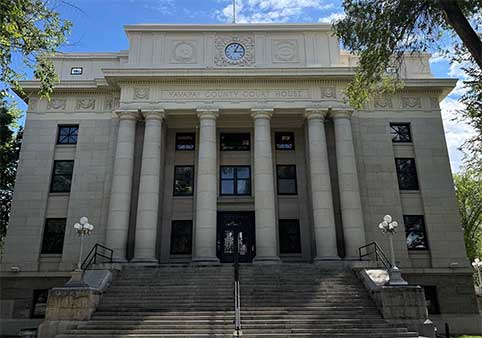
Prescott Private Day Tour with Transportation
Mutli-Attraction Tours | Private Groups
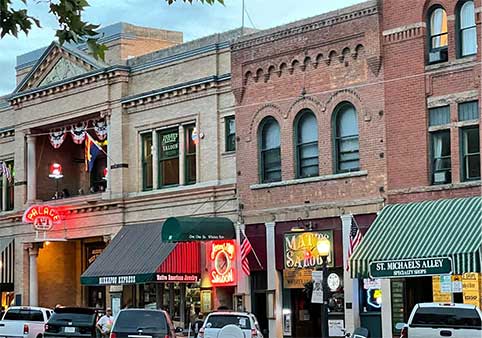
From Phoenix: Tour to Prescott and Whiskey Row
Escape the desert heat and head to the mile-high town of Prescott, Arizona. Visit the famous Sharlot Hall Museum and delve into Arizona's territorial past. Walk through the original Governor's Mansion and learn about the first settlers and miners in the Arizona mountains.
Visit … More
Escape the desert heat and head to the mile-high town of Prescott, Arizona. Visit the famous Sharlot Hall Museum and delve into Arizona's territorial past. Walk through the original Governor's Mansion and learn about the first settlers and miners in the Arizona mountains.
Visit Whiskey Row and enjoy great food, spirits, and a shot of whiskey if you prefer. Imbibe at the same famed bar that Doc Holliday himself leaned on. Explore antique shops, Arizona and western-themed galleries, and saloons.
Mutli-Attraction Tours