Prescott's history is still visible throughout the city. Arizona's first territorial capital grew from a frontier settlement into a center of government, mining, ranching, transportation and commerce, and many of the places connected to that story remain part of a visit today.
Explore Prescott History in Person
Prescott's history is easier to understand when you connect the stories to the places where they happened. Several of the city's most important historic attractions are close enough to experience during the same visit.
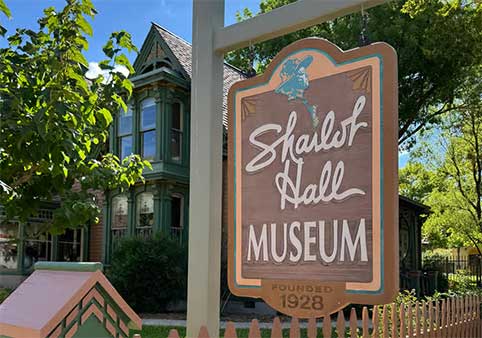
Sharlot Hall Museum
Begin with Arizona's territorial era at Sharlot Hall Museum, where the 1864 Governor's Mansion and other historic buildings help explain Prescott's earliest years as the territorial capital.
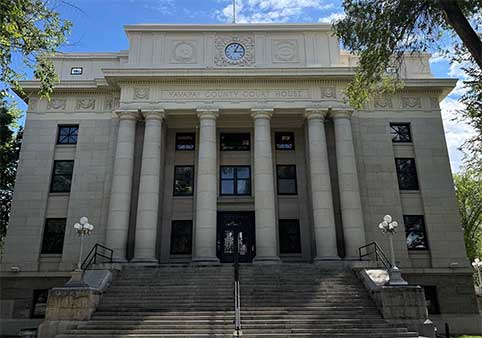
Courthouse Plaza
Continue to Prescott's historic town square, which became the civic center around which downtown businesses, events and community life developed.
Much of that later civic and commercial history can still be experienced around Courthouse Plaza and neighboring Whiskey Row.
Whiskey Row
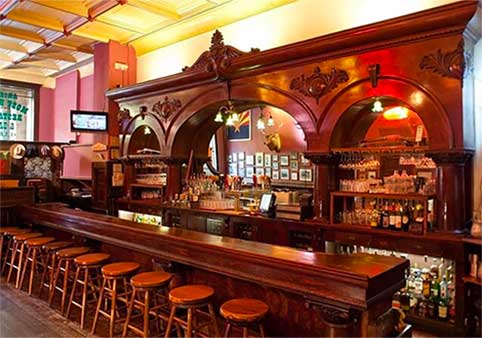
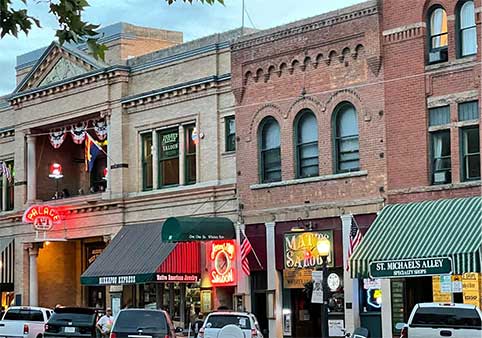
Across from Courthouse Plaza, Whiskey Row represents another side of territorial Prescott: saloons, hotels, commerce, entertainment and the Old West stories associated with the growing town.
Fort Whipple
Explore the military side of Prescott history at Fort Whipple, whose story stretches from the territorial-era Army post into later veterans and medical history.
Phippen Museum
Discover the art, ranching traditions and cowboy heritage that shaped Prescott's Western identity.
Museum of Indigenous People
Add a broader understanding of the region through Indigenous art, cultures and histories of the Southwest.
For a complete overview of Prescott's museums and galleries, see our Prescott museums and art guide.
Walk around Courthouse Plaza, step inside the historic buildings of Sharlot Hall Museum, explore Whiskey Row or visit the Phippen Museum, and Prescott's past becomes much more than a chapter in an Arizona history book.
Prescott became Arizona Territory's first capital in 1864. The capital moved to Tucson in 1867, returned to Prescott in 1877 and remained here until permanently moving to Phoenix in 1889. Prescott also developed as an important center for mining, ranching, military activity and trade in Arizona's central highlands.
Prescott Becomes Arizona's Territorial Capital
Arizona Territory was created in 1863, and the new territorial government soon began establishing a permanent capital in the central Arizona highlands.
Prescott was formally established in 1864 and became the territorial capital as well as the county seat of Yavapai County. The community was named for American historian William Hickling Prescott, author of works including History of the Conquest of Mexico.
The early town was carefully laid out around a central public square, establishing a pattern that remains easy to recognize in downtown Prescott today.
Prescott served as the territorial capital from:
- 1864–1867
- 1877–1889
The capital moved to Tucson between those periods and permanently relocated to Phoenix in 1889.
See Prescott's Territorial History Today
The best place to explore this period is Sharlot Hall Museum, located near the historic center of Prescott.
The museum campus includes the 1864 Governor's Mansion and other historic buildings and exhibits connected to territorial government, pioneer life and the development of central Arizona.
Visitors interested in this part of Prescott's story can also explore our Prescott museums and art galleries guide.
Fort Whipple & the Military Presence
Fort Whipple played an important role in Prescott's early development. Established before the town itself, the military post was relocated closer to Prescott as the territorial capital took shape.
The fort supported the territorial government and became closely tied to military campaigns, transportation and settlement in the region.
This period also cannot be separated from the conflicts and forced displacement experienced by Indigenous peoples of central Arizona as American settlement expanded.
Visitors can learn more about the area's military history at the Fort Whipple Museum and explore Indigenous history and cultures at the Museum of Indigenous People.
Prescott's growth as a territorial capital occurred within a landscape that had been home to Indigenous peoples for generations. Understanding Prescott's history means looking beyond frontier settlement to include the Indigenous communities whose history in central Arizona predates the establishment of the town.
Mining Helps Build Prescott
Gold discoveries in central Arizona were an important catalyst for settlement around Prescott. Mining camps developed throughout the surrounding mountains, bringing prospectors, merchants, laborers and entrepreneurs into the region.
Prescott became an important supply and commercial center for mining districts throughout central Arizona.
Mining fortunes rose and fell, and economic downturns periodically affected the town. By the late 19th century, however, Prescott's economy was becoming more diverse.
Ranching, trade, government, transportation and other industries helped the community survive periods when mining activity declined.
Ranching & Prescott's Cowboy Heritage
Cattle ranching became increasingly important to Prescott's economy during the late 1800s and helped shape the Western identity the city still celebrates today.
Ranches spread across Yavapai County, and Prescott became a center for ranching business, supplies, entertainment and community life.
That heritage remains especially visible through:
- The World's Oldest Rodeo and Prescott Frontier Days
- The Phippen Museum
- Western art and ranching exhibits
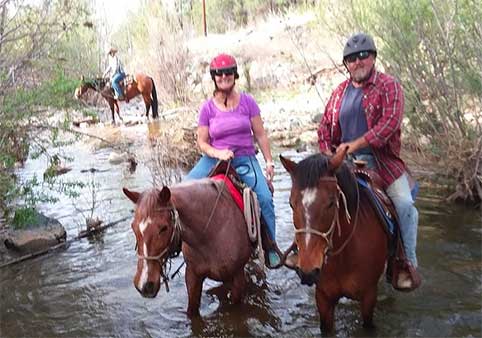
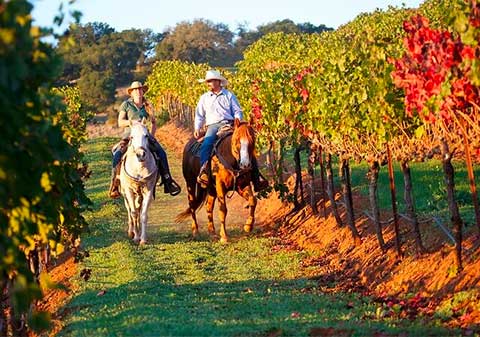
- Horseback riding and ranch experiences
- Prescott's continuing cowboy traditions
See our Prescott Western culture guide for ways to experience that heritage during your visit.
Whiskey Row & Frontier Prescott
Prescott's role as a mining, ranching and territorial center created plenty of demand for entertainment, gambling and saloons.
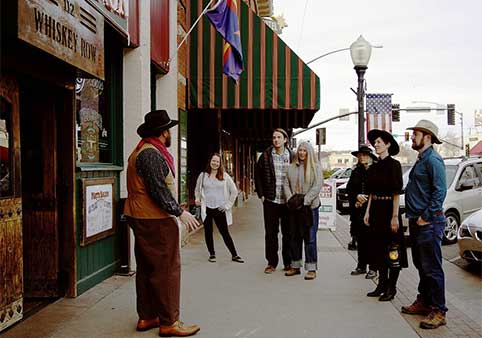
The block of Montezuma Street facing Courthouse Plaza became known as Whiskey Row, at one point home to dozens of drinking establishments.
Today, Whiskey Row is one of Prescott's best-known historic districts. Restaurants, saloons, shops and galleries occupy buildings that continue the block's long relationship with downtown social life.
The Great Fire of 1900
On July 14, 1900, a major fire swept through downtown Prescott and destroyed Whiskey Row along with other nearby buildings.
The disaster could have permanently changed the commercial center of town, but businesses quickly rebuilt. Many of the masonry buildings that followed the fire helped create the streetscape visitors recognize today.
The Palace Restaurant & Saloon famously survived in spirit through the disaster when patrons carried its substantial bar out of the burning building before the structure was lost.
Walking Whiskey Row today therefore tells two stories at once: frontier Prescott before the fire and the city's rapid reconstruction afterward.
The Railroad Changes Prescott
Rail transportation transformed Prescott during the late 19th century.
The Arizona Central Railway reached Prescott in 1886, improving connections between the territorial capital and national transportation networks. Additional railroad development followed, strengthening Prescott's commercial economy and making it easier to move people, supplies and mining products.
By the 1890s, the Santa Fe, Prescott & Phoenix Railway connected the Prescott region more effectively with southern Arizona and larger rail systems.
Part of that railroad legacy survives recreationally today on the Prescott Peavine Trail, which follows a former rail corridor near Watson Lake and the Granite Dells.
Prescott Grows Beyond the Frontier Era
By the turn of the 20th century, Prescott was becoming more than a frontier settlement.
Railroads, electricity, telephones, established businesses and civic institutions helped modernize the community. Prescott continued serving as Yavapai County's governmental and commercial center even after losing the territorial capital to Phoenix.
The city also developed a strong architectural legacy. Historic homes, commercial buildings and neighborhoods from different periods remain throughout central Prescott.
That preservation is one reason visitors can still experience Prescott's history as part of the modern city rather than only inside museums.
Prescott & Arizona Statehood
Arizona became the 48th state on February 14, 1912.
By then, Prescott had already played a major role in territorial government, mining, ranching, transportation and commerce for nearly half a century.
Phoenix had become the permanent capital, but Prescott remained an important political and economic center in northern and central Arizona.
Its earlier role as territorial capital continues to define much of the city's historical identity.
Historic Places to Visit in Prescott
You don't need to study Prescott's history exclusively through exhibits. Several of the city's most important historic places can be experienced during a normal sightseeing day.
Sharlot Hall Museum
Best for: Territorial history and early Prescott
The museum's multi-building campus preserves historic structures and collections related to Prescott, Arizona Territory and the people who shaped the region.
Whiskey Row
Best for: Old West history and downtown Prescott
Walk the historic block along Montezuma Street, explore surviving and reconstructed commercial buildings and see how the district functions as part of modern Prescott.
Courthouse Plaza
Best for: Understanding Prescott's historic city layout
The square remains the center of downtown and continues to host events, festivals and community gatherings more than a century after Prescott's earliest development.
Phippen Museum
Best for: Western art, ranching and cowboy culture
The museum explores Western history through painting, sculpture and other artwork connected to ranching, landscapes and cowboy traditions.
Museum of Indigenous People
Best for: Indigenous cultures and art of the Southwest
The museum provides important context for understanding the peoples and cultures whose history in the region extends far beyond Prescott's establishment as a territorial town.
Fort Whipple
Best for: Military history
The historic military post helps explain Prescott's early strategic importance and the relationship between the territorial government, military expansion and settlement.
A Simple Prescott History Walking Day
You can experience several chapters of Prescott history without spending the entire day driving.
- Morning: Begin at Sharlot Hall Museum to understand Prescott's territorial origins.
- Late morning: Walk toward Courthouse Plaza and explore the surrounding historic streets.
- Lunch: Eat downtown near the square.
- Afternoon: Walk Whiskey Row and explore nearby historic buildings and shops.
- Optional: Add the Museum of Indigenous People or Phippen Museum for a broader look at the region's cultural and Western history.
Browse our Prescott attractions and things to do in Prescott guides if you'd like to combine historical sightseeing with the rest of your visit.
Prescott History Timeline
- 1863: Arizona Territory is created.
- 1864: Prescott is established and becomes Arizona Territory's first capital.
- 1867: The territorial capital moves to Tucson.
- 1877: The capital returns to Prescott.
- 1883: Prescott is incorporated as a city.
- 1886: Railroad service reaches Prescott.
- 1888: Prescott holds the rodeo tradition that becomes known as the World's Oldest Rodeo.
- 1889: The territorial capital permanently moves to Phoenix.
- 1900: The Great Fire destroys much of Whiskey Row and downtown Prescott.
- 1912: Arizona becomes the 48th state.
Prescott has plenty of colorful frontier history, but legends sometimes become tangled with documented events. Museums, historic archives and preserved sites are the best places to separate entertaining Western stories from the historical record.
Explore Prescott History in Person
Prescott's history is easier to understand when you connect the stories to the places where they happened. Several of the city's most important historic attractions are close enough to experience during the same visit.
Sharlot Hall Museum
Begin with Arizona's territorial era at Sharlot Hall Museum, where the 1864 Governor's Mansion and other historic buildings help explain Prescott's earliest years as the territorial capital.
Courthouse Plaza
Continue to Prescott's historic town square, which became the civic center around which downtown businesses, events and community life developed.
Whiskey Row
Across from Courthouse Plaza, Whiskey Row represents another side of territorial Prescott: saloons, hotels, commerce, entertainment and the Old West stories associated with the growing town.
Fort Whipple
Explore the military side of Prescott history at Fort Whipple, whose story stretches from the territorial-era Army post into later veterans and medical history.
Phippen Museum
Discover the art, ranching traditions and cowboy heritage that shaped Prescott's Western identity.
Museum of Indigenous People
Add a broader understanding of the region through Indigenous art, cultures and histories of the Southwest.
For a complete overview of Prescott's museums and galleries, see our Prescott museums and art guide.
Prescott History FAQ
When was Prescott, Arizona founded?
Prescott was established in 1864 as the capital of the newly created Arizona Territory and the county seat of Yavapai County.
Was Prescott the first capital of Arizona?
Yes. Prescott became Arizona Territory's first capital in 1864. The capital moved to Tucson in 1867, returned to Prescott in 1877 and permanently moved to Phoenix in 1889.
Who was Prescott named after?
Prescott was named for American historian William Hickling Prescott, who wrote influential histories including History of the Conquest of Mexico.
Why is Whiskey Row famous?
Whiskey Row became known for its concentration of saloons and entertainment businesses during Prescott's frontier era. After being destroyed in the Great Fire of 1900, the commercial block was quickly rebuilt and remains one of Prescott's best-known historic districts.
What happened in the Prescott fire of 1900?
A major fire swept through downtown Prescott on July 14, 1900, destroying Whiskey Row and other nearby buildings. The district was rebuilt quickly, helping create much of the historic streetscape visitors see today.
What industries helped build Prescott?
Mining was an important early driver of settlement, while ranching, government, military activity, transportation, trade and the railroad also played major roles in Prescott's growth.
Where can you learn about Prescott history?
Sharlot Hall Museum is the strongest starting point for territorial and local history. Visitors can also explore Whiskey Row, Courthouse Plaza, the Phippen Museum, Museum of Indigenous People and Fort Whipple.
What is the oldest part of Prescott?
The historic center around Courthouse Plaza, Whiskey Row and nearby streets contains many of the places most closely associated with Prescott's territorial and frontier-era development.