Fort Whipple is one of Prescott's most important historic sites, with a story stretching from Arizona's territorial beginnings through the Indian Wars, Spanish-American War, World War I and the development of medical care for American veterans.
Established during the 1860s, Fort Whipple served as a U.S. Army post near the newly established territorial capital of Prescott. Over time, the military installation evolved into a hospital and veterans' medical facility. Today, the historic grounds are part of the Bob Stump VA Medical Center, and visitors can learn about this remarkable history at the Fort Whipple Museum.
Fort Whipple represents the military side of Prescott's territorial story. For the civic and settlement history developing alongside the fort, see our Sharlot Hall Museum and Prescott history guides.
Fort Whipple adds an important chapter to a Prescott history trip. While downtown attractions focus heavily on territorial government, pioneers and the Old West, Fort Whipple tells the story of the U.S. military, soldiers, veterans and more than a century of medical history in Prescott.
The History of Fort Whipple
Fort Whipple traces its beginnings to the creation of the Arizona Territory during the Civil War era.
The Army initially established the post near Del Rio Springs in what is now the Chino Valley area. In 1864, Fort Whipple was relocated south to a site along Granite Creek near Prescott, which had become the new territorial capital.
The post was named for Amiel Weeks Whipple, a U.S. Army officer and topographical engineer who participated in important surveys of the American Southwest before being mortally wounded during the Civil War.
From its location near Prescott, Fort Whipple became an important military installation during Arizona's territorial period.
Fort Whipple and Territorial Prescott
Prescott was a very different place when Fort Whipple was established. Arizona had only recently become a separate U.S. territory, mining discoveries were attracting new settlers and much of the region lacked the roads, towns and infrastructure visitors see today.
Army troops stationed at Fort Whipple operated throughout the surrounding territory and helped protect the growing territorial capital and nearby settlements.
The fort also became associated with military campaigns involving Indigenous peoples during the period commonly known as the American Indian Wars.
This history is complex. Military expansion and settlement profoundly affected the Indigenous peoples who had lived in the region for generations. Understanding Fort Whipple therefore means looking beyond the familiar frontier story of soldiers, miners and settlers and recognizing the larger consequences of territorial expansion.
Visitors interested in Prescott's broader territorial story should also explore our history of Prescott and Prescott Western culture guides.
Fort Whipple and the Rough Riders
Fort Whipple's military importance did not end with Arizona's early territorial period.
Whipple Barracks had been scheduled for deactivation by the late 1890s, but the outbreak of the Spanish-American War gave the post another role.
In 1898, Whipple Barracks served as a mobilization point for Arizona volunteers joining the 1st United States Volunteer Cavalry, the regiment that became famous as the Rough Riders.
Among Arizona's best-known Rough Riders was Prescott Mayor William "Buckey" O'Neill, who joined the regiment and was killed during the fighting in Cuba.
The Rough Riders connection remains one of the most interesting links between Prescott's local history and a major event in American history.
From Army Post to Military Hospital
The next chapter of Fort Whipple's history transformed the property from a military post into a center for medical care.
Whipple Barracks was rebuilt during the early 1900s, with new officers' quarters, barracks, administrative buildings, a hospital and other facilities constructed on the grounds.
In 1918, during World War I, the installation became U.S. Army General Hospital No. 20.
Prescott's elevation and climate made the facility particularly important for treating soldiers suffering from respiratory illnesses, including tuberculosis.
The hospital continued serving veterans after the war. Control eventually passed through the U.S. Public Health Service and Veterans Bureau before becoming part of the Veterans Administration system.
This medical history is one reason Fort Whipple is much more than another Old West military site. The property represents a long transition from frontier Army post to veterans' healthcare campus.
Fort Whipple Today
The former military post is now part of the Bob Stump VA Medical Center and Northern Arizona VA Health Care System.
Historic buildings remain alongside more modern medical facilities, creating a campus where several different eras of Prescott history overlap.
The historic district was added to the National Register of Historic Places, recognizing the importance of the former military post and medical campus.
Because this remains an active federal medical facility, visitors should remember that Fort Whipple is not an open historic fort in the same sense as a traditional state or national historic park.
Fort Whipple Museum
The Fort Whipple Museum preserves and interprets the history of the former Army post and its later role in caring for military veterans.
The museum is housed in Building 11, one of the historic officers' quarters on the VA campus.
Exhibits help visitors explore different periods of Fort Whipple's history, including:
- Fort Whipple's role as a U.S. Army post
- Military life in territorial Arizona
- The post's connection to the Rough Riders
- Historic photographs and maps
- Military artifacts
- Medical equipment and hospital history
- The transition from military post to veterans' medical facility
The museum provides valuable context because much of what visitors see around the campus today belongs to later periods in Fort Whipple's history rather than the original 1860s installation.
Who Was Amiel Weeks Whipple?
Fort Whipple was named in honor of Amiel Weeks Whipple, an Army officer, engineer and explorer whose work helped map portions of the American Southwest.
Whipple participated in surveying the boundary between the United States and Mexico and later led an expedition surveying a possible transcontinental railroad route across the Southwest.
During the Civil War, Whipple became a brigadier general in the Union Army. He was mortally wounded at the Battle of Chancellorsville in Virginia in 1863.
The Arizona military post established soon afterward was named in his honor.
Planning a Visit to Fort Whipple Museum
Location
Fort Whipple Museum is located on the grounds of the Bob Stump VA Medical Center in Prescott.
Fort Whipple Museum
Building 11
Bob Stump VA Medical Center
Prescott, Arizona
The campus is a short drive northeast of downtown Prescott.
Continue Your Prescott History Tour
Fort Whipple is most useful when understood as one piece of a larger territorial landscape.
- Sharlot Hall Museum: Learn about territorial government, settlers and Prescott's earliest years.
- Courthouse Plaza: Explore the city's later civic center.
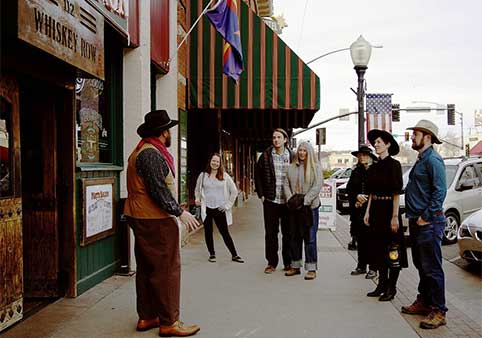
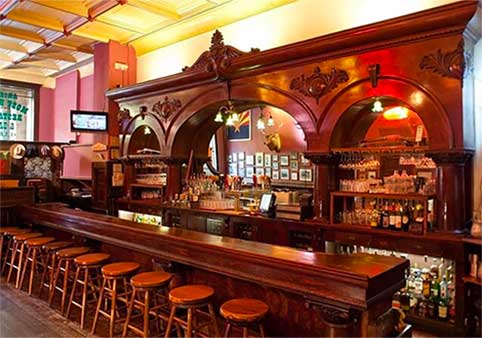
- Whiskey Row: See the commercial and social side of historic Prescott.
- Phippen Museum: Add Western art and ranching history.
- Museum of Indigenous People: Explore Indigenous cultures and art of the Southwest.
Compare Prescott's museums in our museums and art guide.
How Long Should You Spend?
Fort Whipple works best as a shorter historical stop rather than an all-day attraction. Allow roughly an hour for the museum, with additional time if you're particularly interested in military or Prescott history.
Check Before Visiting
Museum operating days and hours can be limited, and access can be affected by holidays, VA operations and special circumstances.
Confirm current museum hours and visitor-access information before making a special trip.
Fort Whipple Museum is located on an active U.S. Department of Veterans Affairs medical campus. Follow current VA visitor, parking and security requirements while on the property.
Combine Fort Whipple with Other Prescott Historic Sites
Fort Whipple makes more sense when experienced as part of Prescott's larger history rather than as an isolated attraction.
Sharlot Hall Museum
Start or continue your history day at Sharlot Hall Museum, where historic buildings and exhibits introduce visitors to Arizona's territorial government, pioneer life and early Prescott.
Whiskey Row
Explore Whiskey Row and Courthouse Plaza to see the commercial and social heart of historic Prescott.
Phippen Museum
The Phippen Museum explores Western art, ranching traditions and cowboy heritage, providing another perspective on the region's history.
Museum of Indigenous People
The Museum of Indigenous People provides an important complement to Prescott's military and pioneer history by focusing on the Indigenous cultures and peoples of the Southwest.
A Prescott History Itinerary
If history is one of the main reasons for your visit, you can connect several attractions into one day:
- Morning: Explore Sharlot Hall Museum and Arizona's territorial history.
- Late morning: Walk Courthouse Plaza and Whiskey Row.
- Lunch: Eat at one of the restaurants in downtown Prescott.
- Afternoon: Visit Fort Whipple Museum to explore Prescott's military and veterans' history.
- Later afternoon: Visit the Phippen Museum or Museum of Indigenous People.
You don't need to visit every museum in a single day. Choosing two or three allows enough time to understand what you're seeing rather than turning Prescott history into a race between parking lots.
See our Prescott museums and art galleries and Prescott attractions guides for more ideas.
Why Fort Whipple Matters
Many Prescott visitors encounter the city's history through Whiskey Row, cowboys, mining and the territorial capital. Fort Whipple reveals another side of the story.
Its history stretches from the establishment of the Arizona Territory through military campaigns, the Rough Riders, World War I medicine and the development of federal healthcare for veterans.
Few Prescott sites connect so many different periods of Arizona and American history in one place.
Museum hours, campus access, exhibits and visitor procedures can change. Confirm current Fort Whipple Museum information before planning your itinerary around a visit.
Fort Whipple FAQ
What was Fort Whipple?
Fort Whipple was a U.S. Army post established during Arizona's territorial period. It served as an important military installation near Prescott before later becoming a military hospital and veterans' healthcare facility.
When was Fort Whipple established?
The original military post was established near Del Rio Springs before being relocated to a permanent site near Prescott in 1864.
Why was Fort Whipple built near Prescott?
The Army established Fort Whipple during the early territorial period and stationed troops there to support military operations and protect the growing territorial capital and surrounding settlements.
Who was Fort Whipple named after?
Fort Whipple was named for Amiel Weeks Whipple, a U.S. Army officer, topographical engineer and explorer who conducted important surveys of the American Southwest before serving in the Civil War.
What happened to Fort Whipple?
Fort Whipple evolved from an Army post into a military hospital and later a veterans' medical facility. The historic site is now part of the Bob Stump VA Medical Center campus in Prescott.
Can you visit Fort Whipple today?
Visitors can learn about the site's history at the Fort Whipple Museum, located in a historic officers' quarters on the Bob Stump VA Medical Center campus. Because the property remains an active VA facility, visitors should confirm current museum hours and access requirements before arriving.
What is inside the Fort Whipple Museum?
The museum interprets Fort Whipple's military and medical history through historic photographs, maps, artifacts, military objects, medical equipment and other exhibits related to the site's long history.
What was Fort Whipple's connection to the Rough Riders?
Whipple Barracks served as a mobilization point for Arizona volunteers who joined the 1st United States Volunteer Cavalry during the Spanish-American War. The regiment became famous as the Rough Riders.
Is Fort Whipple still a military base?
No. The former military installation evolved into a veterans' medical facility and is now part of the Bob Stump VA Medical Center and Northern Arizona VA Health Care System.